
The Gold Standard on the Dock: Why BIA Marine Card Holders Lead on Safety & WHS
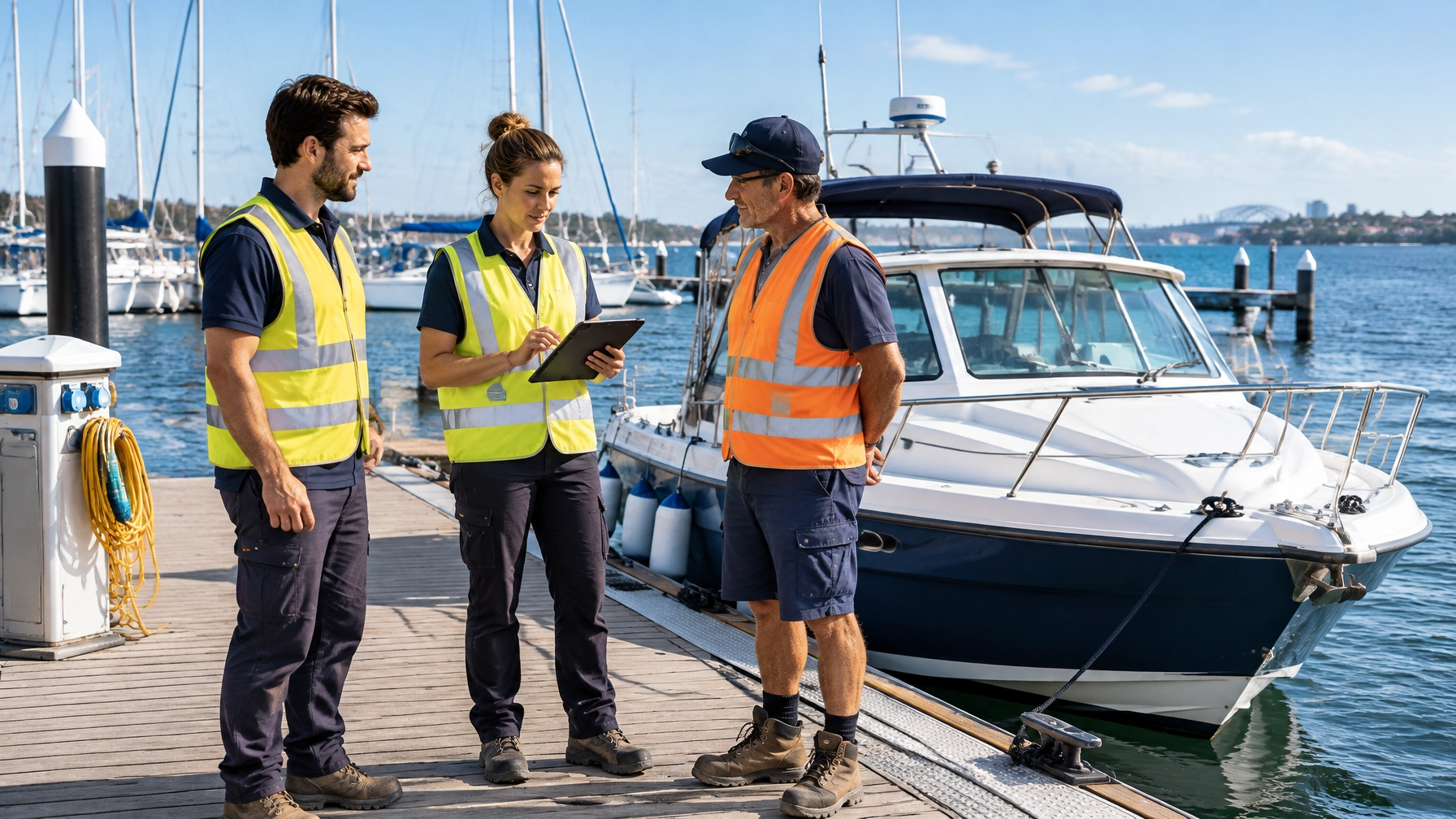
Before accepting a dockside job, confirm the work location, scope, site-access rules and induction requirements with the marina or boatyard. A clear plan helps everyone arrive prepared, and reduces avoidable surprises around fuel, electrical leads, haul-out equipment and busy dock traffic.
Marinas, slipways and docks are workplaces, even when the work is on a privately owned boat. That’s why safety is the first subject in MarineTasker’s new WHS & Marina Compliance category. The goal is practical: help owners, marine professionals and capable skilled hands understand the work environment before a job begins.
On-the-dock tip: Don’t assume a familiar marina means familiar conditions. Check in with the site contact, ask about local hazards and emergency arrangements, and confirm whether the job needs a separate induction, permit or safe work method statement.
What the BIA Marine Card represents
The BIA Marine Card is a marine-industry Workplace Health & Safety general induction. According to the Boating Industry Association, it’s used by industry workers, contractors and DIY boat owners as evidence they’ve completed an induction designed around common marine workplace risks.
The course covers topics such as hazard identification, risk assessment, safety signage, safety data sheets and safe work method statements. It also provides an overview of relevant WHS obligations. The Marine Card induction information explains that it applies across places including marinas, boatyards, workshops and slipways.
That makes the card a useful trust signal: it shows that a person has taken steps to understand safety in marine work environments. It doesn’t, on its own, demonstrate competence in a particular trade, provide a licence, prove current insurance or meet every marina’s entry rules. A site may still require its own induction or additional checks before work starts.
Why credentialled workers stand out
At a marina, safety is visible in everyday decisions: noticing a trip hazard, keeping an access route clear, understanding where to check in, or stopping to clarify an unfamiliar task. A completed general induction helps establish a shared baseline for those conversations.
A recognised credential can also make it easier for owners and marina teams to identify workers who have completed relevant training. But access remains the marina’s decision. A Marine Card may support a request for access or meet a general induction requirement at a participating site; it doesn’t guarantee priority entry.
From a Sydney Boat Show conversation to built-in credential recognition
At the 2026 Sydney Boat Show at Sydney Olympic Park, MarineTasker Founder and CEO Martin Sheridan met Boating Industry Association representative Nik Parker. They discussed the BIA Marine Card as a credential MarineTasker would like to recognise within its marketplace.
MarineTasker has since built BIA Marine Card recognition into its platform and is a signed-up BIA partner. Verified credentials get visible status in the marketplace, so owners can make more informed choices and marina teams have clearer information when arranging work. That recognition respects the BIA’s credential and the individual site’s requirements.
This matters across Greater Sydney and Broken Bay, where a task may involve a marina berth, a swing mooring, a tender run or a haul-out slot. The right preparation for work at Rozelle Bay may differ from a job in Middle Harbour, Pittwater, Broken Bay, Port Hacking or Botany Bay. The location, access arrangements and worksite rules all shape the safe way to get the job done.

What the Marine Card means for skilled hands and boat owners
For experienced and capable hands on MarineTasker, holding a BIA Marine Card is a practical way to stand out. With BIA credential recognition built into the marketplace, verified card holders can show their induction status directly on their profile rather than proving it job by job. The benefits stack up:
- Visible trust signal: A recognised industry credential sits on the profile, giving owners confidence before they even make contact.
- Easier marina conversations: Card holders can point to completed WHS general induction when a marina asks about site requirements, which helps at check-in across marinas, boatyards and slipways.
- More work opportunities: Owners choosing between capable hands for washdowns, detailing, line handling or slipway assistance have a clear reason to shortlist someone with a verified credential.
- A shared safety baseline: The induction covers hazards card holders actually meet on the dock, from fuel and power leads to moving equipment and traffic.
For boat owners, the value is peace of mind with less homework. Hiring through MarineTasker already brings two-way ratings, verified before-and-after photos and upfront safe payments; adding a recognised WHS credential to a provider’s profile means the safety basics are covered before the first visit. Owners arranging work at a berth, swing mooring or haul-out slot can see who has completed industry induction training, ask better questions about site rules, and keep the vessel’s maintenance records in better shape along the way.
Whatever the platform shows, boat owners should always check credentials before a job starts. Ask for licence and insurance evidence when the work calls for it, confirm the provider’s experience fits the task, and note it with the job records. A credential on a profile is a strong starting point, but the owner’s own check is what makes the arrangement watertight.
Site induction is more than a credential check
A general industry induction and a marina-specific induction serve related but different purposes. The first builds broad awareness of marine workplace hazards. The second can explain the particular site’s access points, emergency procedures, restricted areas, traffic patterns and local controls.
For a boat owner, a clear job scope helps the provider understand what they’re walking into. For a contractor, knowing whether the work is alongside a dock, on a swing mooring or at a slipway can affect tools, access, timing and risk controls. Before work starts, the parties should clarify:
- The exact location and the correct way to access the vessel.
- What work is included, and what is outside the agreed scope.
- Any marina or boatyard induction, sign-in or check-in requirements.
- Hazards such as fuel, power leads, moving equipment, weather or restricted access.
- Whether the work needs a licensed trade, insurance evidence, a permit or a safe work method statement.
WHS responsibilities depend on the people and organisations involved, the work and the applicable state or territory requirements. A platform can help organise information, but it can’t take over the safety duties of a marina, employer, contractor or other person involved in the work.
How MarineTasker plans to handle induction records
MarineTasker is building its marketplace as a technology platform and workflow facilitator, not a marine contractor, marina operator or licensing body. For the planned January 2027 launch, its workflow is intended to make job requirements and relevant records easier to surface before a provider accepts work.
The planned approach includes:
- Provider records: Induction evidence could be attached to a provider profile for review, subject to the verification process developed for launch.
- Site-specific requirements: Where information is available, a marina’s induction or access requirements could be shown before a provider accepts a job.
- Job records: Check-in and check-out steps, a clear scope and verified before-and-after photos are planned to support a useful record of work.
- Trade checks: Licence and insurance verification for regulated work is part of the planned marketplace workflow.
These features are planned for development, not live today. MarineTasker won’t issue BIA Marine Cards or decide that a person is qualified for regulated work. The platform’s role is to help owners, providers and participating sites organise information and follow an agreed process.

Ad-hoc jobs compared with a structured workflow
| Before work | Ad-hoc cash job | MarineTasker workflow planned for launch |
|---|---|---|
| Credentials | Often checked informally or not recorded | Relevant provider evidence can be reviewed through a profile |
| Site induction | Requirements may be unclear until arrival | Site requirements are intended to be surfaced before acceptance |
| Job scope | Details can be scattered across calls and messages | Agreed scope and location are intended to sit with the job |
| Payment | Arrangements vary between owner and provider | Upfront safe payments are planned for launch |
| Work record | Photos and details may be difficult to find later | Before-and-after photos and job records are planned |
A structured process can’t eliminate every risk, and it doesn’t replace site supervision or safety procedures. It can, however, make key information easier to find before people and equipment arrive at the dock.

Building a safer, more connected waterfront
A Marine Card is a practical starting point for a shared safety culture, not a shortcut around site rules. When owners describe the job clearly, providers check the site requirements, and marinas communicate their induction process, everyone has a better chance of arriving ready to work.
MarineTasker is developing its planned credential and job workflows with that everyday reality in mind. Its January 2027 Open Beta will begin in Greater Sydney and Broken Bay, followed corridor by corridor: Lake Macquarie and Newcastle in April, then Queensland in July, followed by Victoria, Western Australia and South Australia.
The pre-launch Open Beta waitlist is open now. Early registrants can claim available founding perks, including $0 monthly subscriptions during beta, a flat 10% founding commission on a provider’s first 20 jobs or six months (excluding GST and platform fees, compared with the standard 15%+ tiers), a Founding Fleet badge, no lock-ins and no credit card required. Many hands make light work, and clear safety information helps every one of them.
Join the Open Beta waitlist and claim available founding perks at marinetasker.io/beta.
Frequently asked questions
Do BIA Marine Card holders get priority marina access?
Some marinas recognise the card as a general induction credential, but each site sets its own entry requirements. MarineTasker has built BIA credential recognition into its marketplace, giving verified card holders visible status.
Is the BIA Marine Card a trade licence or safety accreditation?
No. It’s evidence of a completed marine-industry WHS general induction. It doesn’t replace trade licences, insurance, work permits or other job-specific requirements.
Can MarineTasker verify marina inductions now?
Not yet. Induction-record and site-requirement workflows are planned for the January 2027 launch and are still in development.
Get first access to verified dockside care.
Join the Sydney Harbour & Broken Bay Open Beta. Lock in $25 toward your first Task or secure a 10% Founding Provider spot.
Lock In Founding Access