
Public Liability, Marine Insurance, and Licences: What Every Contractor Needs to Operate Legally in NSW
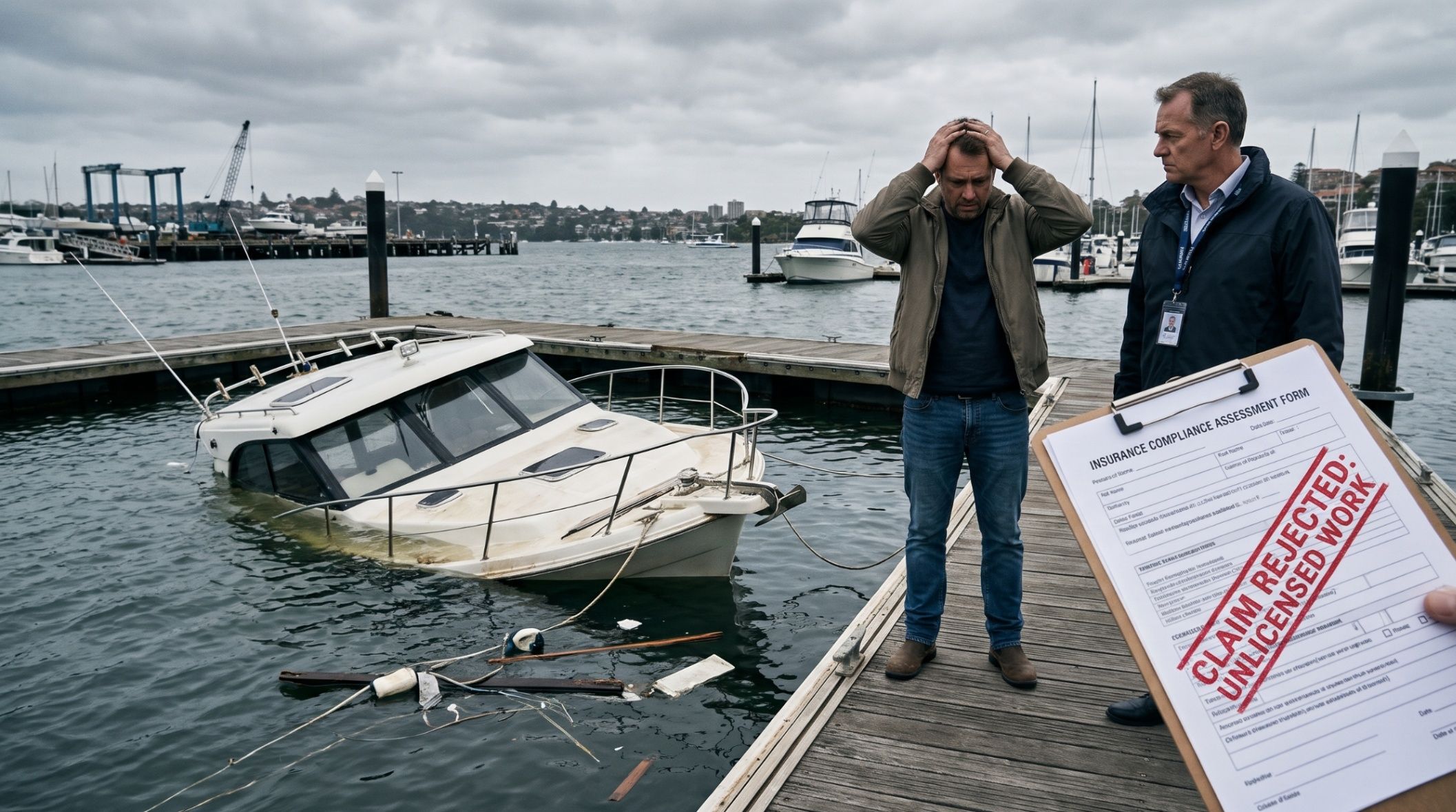
If you’re a marine tradesperson, independent contractor or skilled hand working from Sydney slipways, hardstands or marina berths, check your credentials and cover before accepting the job, not when you arrive at the gate.
Requirements can differ between sites. A contractor heading to Rozelle Bay may need to provide different documents from someone working on a moored vessel in Pittwater. The practical rule is simple: confirm the work, your authorisations, your insurance and the marina’s conditions before quoting or setting off.
Four things to check before the job
These protections and requirements do different jobs. One certificate can’t stand in for another.
| Requirement | What it relates to | When it matters |
|---|---|---|
| Public liability insurance | Third-party injury or property damage arising from your work, subject to policy terms | A marina or boatyard may require evidence before site access |
| Marine or tools insurance | Marine work exposures, tools and equipment, subject to policy terms | When working on or around vessels, equipment or marina facilities |
| Workers compensation | Eligible workers injured in the course of work | When you employ workers or your business is otherwise required to hold a policy |
| Trade licence or certificate | Authority to undertake or supervise specified regulated work | Before carrying out regulated work such as electrical wiring or gasfitting |
1. Confirm your public liability policy fits the job
Public liability insurance is designed to respond to certain third-party injury and property damage claims connected with your business activities. But a policy described as “general handyman” cover may not be suitable for work afloat, on a hardstand, or inside a vessel.
Marinas commonly require proof of public liability before allowing contractors onto the site. Minimums and other conditions vary, so check the site’s contractor requirements rather than assuming your current policy will be accepted. Ask for the contractor pack or written requirements before you commit.
Check your certificate of currency is current and that the policy wording reflects the work you actually do. In particular, ask your insurer or broker about marine-work exclusions, work on vessels, hot work, pollution and subcontractors. A certificate shows that a policy is current; it doesn’t guarantee that every activity or claim is covered.
2. Match your NSW licence to the work
Some work on a vessel may look routine but still fall within regulated trade work. In NSW, electrical wiring work requires an appropriate licence or certificate, regardless of job value or whether it’s residential, commercial or industrial. The correct authorisation depends on whether you’re contracting, supervising or doing the work.
Gasfitting, including relevant LPG work, and plumbing or drainage work also have licensing requirements. The authorisation must match the work category, and supervision or sign-off rules may apply. Check the current requirements through NSW Government’s electrical work guidance and its plumbing, draining and gasfitting guidance. For verification, use the relevant NSW Fair Trading and Building Commission NSW information and official licence-checking channels. Confirm the licence is current and appropriately scoped before the work starts.

Other marine trades may require specific qualifications or certifications for particular tasks. Check applicable requirements for the work and site rather than relying on a generic trade title or years of experience.
And keep the distinction clear: a boat-driving licence issued through Transport for NSW relates to operating a vessel. It doesn’t authorise electrical, gasfitting or other regulated trade work.
Tradie tip: Keep your certificate of currency and licence details easy to access on your phone. If a marina asks for proof at the gate, you don’t want to be searching through old emails. On MarineTasker, these documents sit in your provider profile, so they can easily be shown to marinas or boat owners when asked.
3. Ask about marine and tools cover
Public liability isn’t the same as insurance for your tools, equipment or work on someone else’s boat. Before taking a job, ask your broker whether your insurance responds to the risks involved in that specific work.
One useful phrase to raise is care, custody and control. Policies may treat property you’re working on differently from other third-party property, and exclusions can apply. Don’t assume a policy will cover accidental damage to a vessel simply because it has a public liability limit. Describe the job clearly to your insurer and get their answer in writing.
Also check whether your tools and equipment are covered while stored, transported or used at a marina or boatyard. The right details matter whether you’re fitting out a motor cruiser, working on a sailing yacht or carrying equipment between berths in Middle Harbour.

4. Check workers compensation and business basics
If you employ people, check your workers compensation obligations with icare NSW. Some small businesses may qualify for an exemption if they meet all the applicable conditions. Don’t assume that someone is outside the rules just because a contract calls them a subcontractor; ask icare or a suitable adviser if you’re unsure.
A sole trader without staff generally doesn’t take out workers compensation for themselves. Personal accident or income protection cover may be worth considering, and some marina requirements may ask sole traders for evidence of personal accident cover.
If you’re operating independently, check that your ABN and business registration details are appropriate for how you operate. GST registration obligations depend on current ATO rules and thresholds, so check the Australian Taxation Office’s GST guidance rather than relying on an outdated figure.
5. Prepare your site credentials and scope
The BIA Marine Card provides marine-industry WHS general induction evidence and supports access arrangements at participating sites. It isn’t a trade licence, insurance policy or substitute for an individual marina’s own induction, permits or site rules.
Before accepting a job, run through this checklist:
- Confirm the written scope, location, access arrangements and who supplies materials.
- Check that each required licence or certificate is current and covers the work.
- Have a current public liability certificate of currency available.
- Confirm with your insurer that the policy is suitable for the marine work and vessel exposure.
- Check tools and equipment cover, and ask about care, custody and control exclusions.
- Confirm workers compensation requirements if you employ or engage others.
- Check your ABN, business details and GST position against current requirements.
- Provide any requested Marine Card evidence, marina induction records, permits or safety documents.
Owners should also check a contractor’s credentials before work begins. A clear scope and a straightforward exchange of documents helps both sides know what’s agreed.
Where MarineTasker fits
MarineTasker is a two-sided technology platform and workflow facilitator; it doesn’t perform the work, issue licences or determine whether someone is qualified. MarineTasker is a signed-up Boating Industry Association partner, and BIA Marine Card recognition is built into the marketplace.
For the planned January 2027 launch in Greater Sydney and Broken Bay, the workflow is intended to include licence and insurance checks, induction evidence on provider profiles, site requirements surfaced before job acceptance, job photos, job records and a digital vessel logbook. These are planned features, not live services. Site inductions and check-in/check-out records are part of the future roadmap, not the January launch workflow.
With licence and insurance evidence held on provider profiles, contractors can show their documents to marinas or boat owners the moment they’re asked, rather than digging through emails at the gate. Two-way ratings can also help owners and providers recognise reliable, professional conduct over time. Many hands make light work, but the right credentials and a clear scope make each job safer to start.
Claim the available founding perks during the pre-launch Open Beta period at marinetasker.io/beta. Early registrants can access $0 monthly subscriptions during beta and a flat 10% founding commission on their first 20 jobs or six months, compared with standard tiered commission of 15%+; commission figures exclude GST and platform fees. No lock-ins and no credit card.
General information, not legal or insurance advice.
Frequently asked questions
Does public liability insurance cover damage to the boat I’m working on?
Not necessarily. Vessel damage may fall under care, custody and control exclusions, so ask your insurer or broker to confirm cover for the specific work.
Does a boat licence qualify me to do marine trade work?
No. A boat-driving licence relates to operating a vessel; regulated trade work may require a separate NSW trade licence or certificate.
Is a BIA Marine Card a trade licence?
No. It provides marine-industry WHS induction evidence and can support site access, but it doesn’t replace trade licences, insurance or any marina-specific requirements.
Get first access to verified dockside care.
Join the Sydney Harbour & Broken Bay Open Beta. Lock in $25 toward your first Task or secure a 10% Founding Provider spot.
Lock In Founding Access