
General Hand or Licensed Marine Pro? How to Balance Cost and Liability on Your Boat
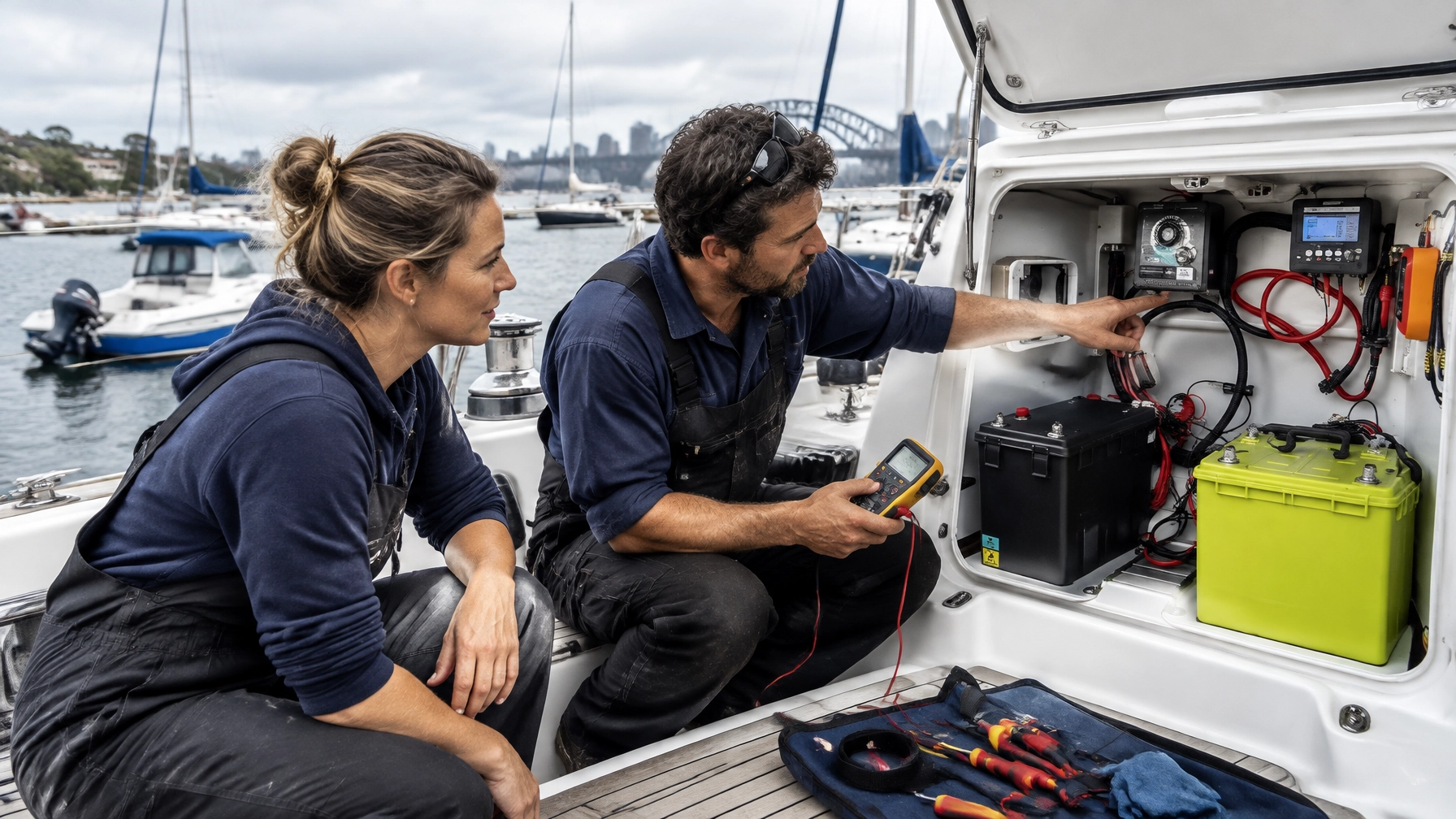
Save on labour by matching the job to the right level of skill, but don’t treat regulated or safety-critical work as a budget experiment. A washdown and a fixed electrical repair are not interchangeable jobs, even if both happen on the same boat.
For owners, the practical question is not simply “Can someone do this for less?” It’s “What skills does this task need, what are the consequences of getting it wrong, and what do the marina, regulator and insurer require?”
A simple three-part decision
Before posting or accepting a quote, consider:
- Is the task regulated? Electrical and gas work can be subject to state or territory licensing rules.
- Could a mistake compromise safety or control? Steering, propulsion, fuel and structural work need appropriate specialist competence.
- What do the site and policy require? Marina rules and insurance conditions can set requirements beyond the task itself.
If the job is low-risk, non-regulated and within the person’s demonstrated experience, a skilled hand may be a sensible fit. If it involves compliance, a safety-critical system or uncertainty about the rules, get the relevant trade involved.

Which jobs suit which provider?
A skilled hand can be valuable without being a licensed tradesperson. Washdowns, detailing, polishing, fitting covers, line handling, fender and rope management, non-structural interior cleaning, and general labour at a slipway are examples of practical assistance. A capable hand can also support a licensed trade as a second pair of hands, provided the professional directs the work and the task is appropriate.
| Task | Suitable provider | Why |
|---|---|---|
| Washdown, polishing or fitting covers | Skilled hand | Low-risk care and general labour |
| Antifoul scraping preparation | Skilled hand, within agreed scope | Preparation assistance is distinct from applying coatings or handling regulated materials |
| Fixed electrical or shore-power fault | Appropriately licensed electrician | Electrical requirements vary by state; marine installations should also be assessed against relevant standards |
| LPG appliance, hose or pipework work | Licensed gasfitter | Gas work on boats can carry serious fire, explosion and health risks |
| Engine service or drivetrain repair | Qualified marine mechanic | Correct diagnosis and repair protect reliability and safe operation |
| Hydraulic steering, steering cables or hull damage | Qualified marine specialist | Mistakes can affect control or structural integrity |
For electrical systems, AS/NZS 3004 provides technical requirements for electrical installations in marine craft. It is a standard, not a substitute for state licensing rules. Check the requirements where the boat is being worked on and use a suitably licensed electrician when required. Energy Safe Victoria’s marine craft guidance, for example, recommends licensed professionals for electrical safety checks and requires licensed gasfitters for gas installation work in Victoria.
Tradie tip: If the job needs a compliance certificate or formal test, confirm who is authorised to do the work and provide the documentation before anyone starts.
Don’t ignore the grey areas
Some jobs need a closer look rather than a blanket yes or no:
- Antifoul application: Check local requirements, product instructions and marina or boatyard rules. Scraping preparation and applying the coating aren’t necessarily the same scope.
- Electronics and solar: Equipment choice, fixed wiring, system integration and manufacturer warranty terms can affect who should install it. Bring in an electrician where the work falls within regulated electrical work.
- Trailer bearings: A straightforward inspection is different from a repair that affects safe towing. Use someone with relevant mechanical competence.
- Owner maintenance: Follow the manufacturer’s instructions and stay within demonstrated skill. Stop and seek help if the task reaches wiring, fuel, gas, steering or structural components.
A task can cross categories. For example, replacing a removable fitting may be straightforward, while altering wiring behind it may not be. Describe the full job (not just the part that seems simple) when requesting a quote.

The second-pair-of-hands approach
Many jobs don’t have to be either “owner does everything” or “trade does everything”. A qualified professional can lead the regulated or specialist work while an experienced hand takes on suitable preparation, lifting, cleaning or general assistance.
That can help owners manage labour costs without asking an unqualified person to take responsibility for work beyond their scope. It also gives capable local hands a fair way to earn from the skills they can confidently offer.
At a Rozelle Bay slipway, for example, an experienced hand might help prepare the work area and manage equipment while a marine mechanic handles the engine service. In Pittwater, a hand could assist with a washdown and gear organisation around a swing mooring, while a qualified trade carries out a separate steering repair. The owner and provider should agree the scope, boundaries and supervision before work begins.
Keep scope, site rules and insurance clear
Before work starts, write down what is included, what is excluded, who supplies materials and how completion will be checked. Ask for licence details and insurance evidence when the job calls for them. Keep quotes, invoices, test results and certificates with the vessel’s maintenance records.
Owners should also check their marina’s contractor and induction requirements. A marina may set access or work-site rules, particularly around haul-out slots, electrical connections and contractor insurance. If work takes place in Middle Harbour, Broken Bay, Port Hacking or Botany Bay, confirm the relevant site arrangements rather than assuming every location follows the same process.
Insurance cover depends on the policy and circumstances. Unlicensed or unsuitable work can affect cover, but there’s no universal rule that every DIY task automatically voids a policy. Read the policy wording and ask the insurer about substantial repairs, modifications or work on safety-critical systems. This guide is general information, not legal or insurance advice.
How MarineTasker helps owners make the match
MarineTasker is a two-sided technology marketplace and workflow facilitator, not a marine contractor and not the authority that decides who is qualified. The platform is designed to help owners match scoped jobs with commercial trades or capable skilled hands, depending on the task.
For the planned January 2027 Greater Sydney and Broken Bay launch, the workflow includes licence and insurance checks, induction evidence on provider profiles, site requirements surfaced before job acceptance, and job photos. Site inductions and check-in/check-out records are not part of that launch: they are planned as part of the future roadmap. These features are planned; MarineTasker does not issue licences or replace an owner’s checks with a regulator, marina or insurer.
Owners can use the platform’s planned upfront safe payments and job records to support clearer coordination. They should still confirm that the provider’s credentials and experience fit the work.
For a straightforward washdown, a skilled hand may be the right choice. For LPG, regulated electrical work or a steering fault, choose the relevant qualified professional. Clear scope and the right match help everyone work more safely, and Many hands make light work.
Claim the early-registrant perks available during the pre-launch Open Beta at marinetasker.io/beta.
Frequently asked questions
Can a skilled hand help with a boat repair?
Yes. Skilled hands can take on suitable low-risk tasks or assist a qualified professional. Regulated and safety-critical work should be led by appropriately qualified trades.
Does AS/NZS 3004 mean all boat electrical work requires a licence?
AS/NZS 3004 is a technical standard for electrical installations in marine craft; it is not itself a licence. State and territory rules determine who may perform electrical work.
Can DIY work affect my boat insurance?
It can, depending on the work, circumstances and policy terms. Check your policy and ask your insurer about substantial repairs or modifications before proceeding.
Get first access to verified dockside care.
Join the Sydney Harbour & Broken Bay Open Beta. Lock in $25 toward your first Task or secure a 10% Founding Provider spot.
Lock In Founding Access