
From Driveway to Ramp: Routine Maintenance Essentials for Jet-Skis & Marine Trailers
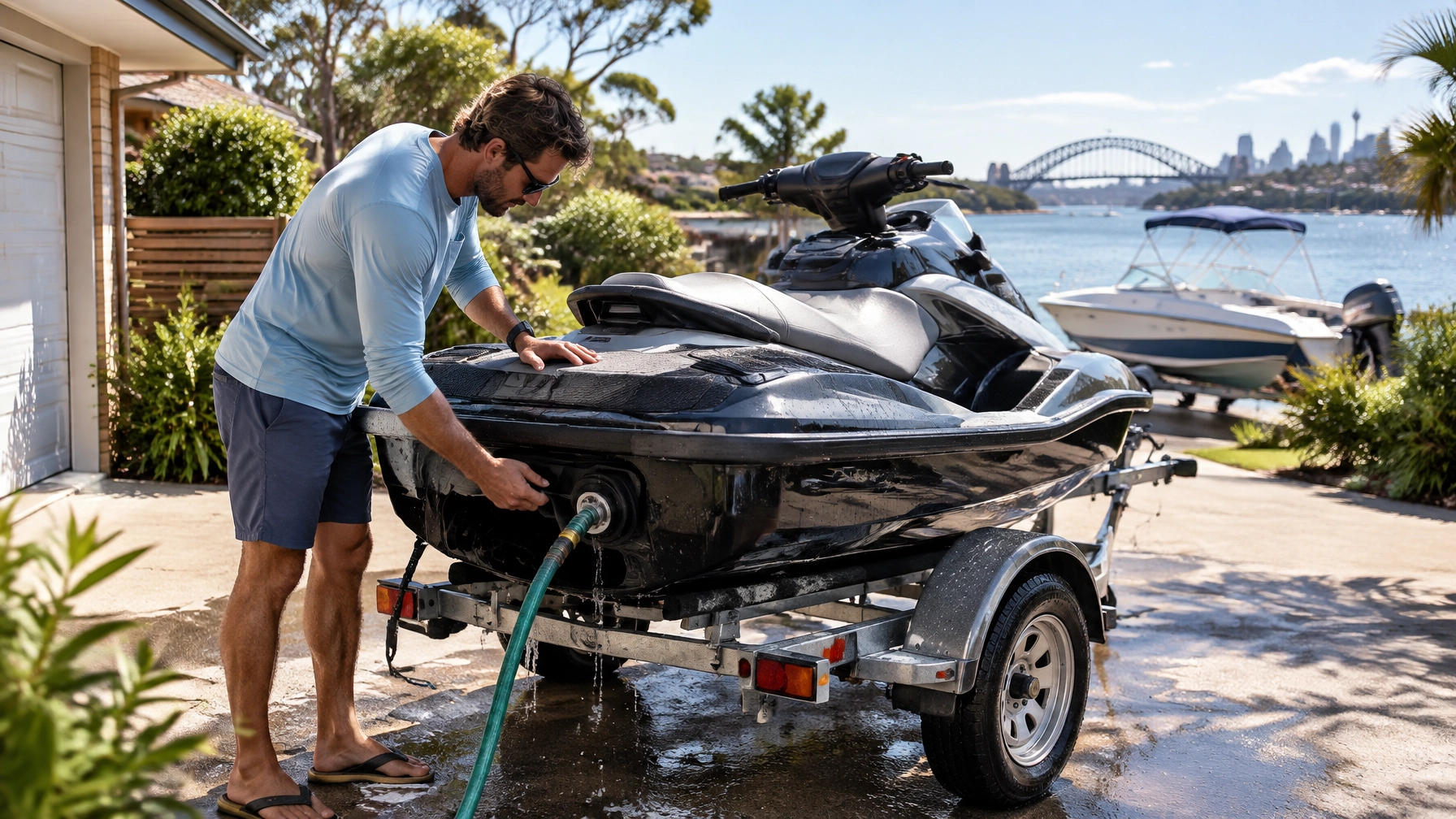
Flush and rinse your PWC as soon as you get home, then check the trailer before the next tow. A craft that lives outside on a driveway takes a steady hit from salt, sun and short trips: the ski gets flushed late, while the trailer is dunked at the ramp and left to bake in the heat. Bearings, tyres and electrical connections often show the strain first.
After every ride: clear salt, sand and water
1. Flush the cooling system
Use the designated flushing connection and follow the sequence in your manufacturer’s manual, including the engine start-and-stop order and flush duration. These details differ between models; using the wrong sequence can risk water entering parts of the engine or exhaust system. Watch for the expected water flow and stop if it doesn’t appear as described.

Salt crystals and sand can build up after a ride, especially during a busy summer of repeated trips to Botany Bay, Port Hacking or the Hawkesbury. Flush promptly, rather than leaving the job until the next outing.
2. Rinse the craft and trailer
Use fresh water on the hull, jet pump intake grate, ride plate and trailer. Rinse the springs, wheel areas and other places where salt and grit collect. Avoid directing high-pressure water at electrical components or seals unless the manual says it’s safe.
3. Drain and ventilate
Tilt the bow up to help water drain from the hull. Remove drain plugs if fitted, dry the bilge area, and leave the seat or hatches open to ventilate in a secure spot. This helps reduce trapped moisture, corrosion and mould.
Check the jet pump and basic systems
With the engine off and the key or lanyard removed, inspect the intake grate for debris. Look for rope or fishing line around the impeller shaft, but don’t put fingers near the intake. If you spot damage or suspect something is wrapped around the shaft, arrange a proper inspection.
Cavitation, when engine revs rise but speed doesn’t follow, can signal a problem with the impeller or wear ring. Their clearances and installation matter: leave repairs to a qualified marine mechanic.
At intervals set by the manual, check oil level and condition, battery terminals and charge, fuel-system basics, and any filter or spark-arrestor maintenance specified for your model. Also inspect lubrication points and check that the throttle, cables and steering move smoothly.
Tradie tip: A hot trailer hub plunged into cold water can draw water past a seal as it cools. After a saltwater launch, pay attention to bearing condition and follow the hub manufacturer’s instructions for inspection and lubrication.
Trailer checks before the next tow
A noisy or loose wheel deserves attention before a long drive to the coast. Humming, grinding, wobble, grease leaks or unusual heat after a short tow can point to bearing trouble. If you’re unsure how to inspect or service a bearing, have a trailer specialist check it. Don’t assume every hub is built for the same regreasing routine.

Check these items before each trip:
- Tyres and spare: pressure, sidewall cracks, tread, age and spare-wheel condition.
- Lights and wiring: test them each time; plugs and connections can corrode after repeated dunking.
- Winch and tie-downs: check the strap or cable, ratchet and UV-damaged restraints.
- Coupling and safety gear: inspect the coupling, safety chain and jockey wheel.
- Bearings: listen for noise and check condition; service or replace them at the interval specified for the trailer and hub.
| When | Checks and maintenance |
|---|---|
| After every ride | Flush as instructed, rinse PWC and trailer, drain and ventilate |
| Before every trip | Check tyres, lights, coupling, safety chain, winch and tie-downs |
| Regularly and after immersion | Inspect bearings; lubricate or service as specified by the manufacturer |
| At service intervals | Arrange a full service and have the impeller and wear ring inspected as needed |
Ramp-day quick check
Summer ramps get busy. A short check in the driveway can prevent delays on the queue and help catch problems before launch.
- Fuel sufficient for the trip; check for leaks or fumes before starting.
- Hull drain plugs fitted and closed.
- Registration numbers clearly displayed and current.
- Required lifejackets on board, correctly sized and accessible.
- Kill-switch lanyard present and in good condition.
- Trailer lights working; coupling and safety chain secure.
- Tie-downs removed only when it’s safe to launch.
- Bearings checked for warning signs; don’t rely on touch alone to diagnose them.

Know the rules for your waterway
NSW requires PWC registration, and every person on a PWC, including anyone being towed, must wear a Level 50S or higher lifejacket. The NSW PWC operating areas and restrictions identify exclusion and restriction zones. Sydney Harbour is an exclusion zone for PWCs, including Middle Harbour and connected waterways; this is not simply an 8-knot restriction. Botany Bay, Port Hacking and Hawkesbury/Broken Bay have their own restrictions and prohibited areas, so check current maps and rules before setting out. See the NSW lifejacket requirements and PWC handbook for details.
Owners can usually handle routine flushing, rinsing and visual checks. Marine mechanics or trailer specialists are the better fit for engine diagnostics, electrical faults, impeller and wear-ring work, or bearing rebuilds when the condition or procedure is uncertain.
MarineTasker is building a two-sided platform to help owners scope work and connect with marine professionals or capable local hands. The planned January 2027 Greater Sydney and Broken Bay launch includes licence and insurance checks, job photos and records, and a digital vessel logbook linked to the HIN. The platform facilitates connections and job workflows; providers perform the work. Many hands make light work.
Claim early registrant perks for the MarineTasker Open Beta at marinetasker.io/beta.
Frequently asked questions
How often should a PWC be flushed**?
Flush the cooling system after each ride, using the sequence and run time specified in the manufacturer’s manual.
Should trailer bearings be greased after every launch?
Check and service bearings according to the hub and trailer manufacturer’s instructions. After saltwater immersion, inspect them promptly; not all hubs are designed for routine owner regreasing.
Can you ride a PWC on Sydney Harbour**?
No. Transport for NSW lists Sydney Harbour, including Middle Harbour and its connected waterways, as a PWC exclusion zone. Check current NSW rules before riding elsewhere.
Get first access to verified dockside care.
Join the Sydney Harbour & Broken Bay Open Beta. Lock in $25 toward your first Task or secure a 10% Founding Provider spot.
Lock In Founding Access