
Contractor Transit: How Mobile Tradies Can Optimize Travel Across Sydney’s Marine Corridors
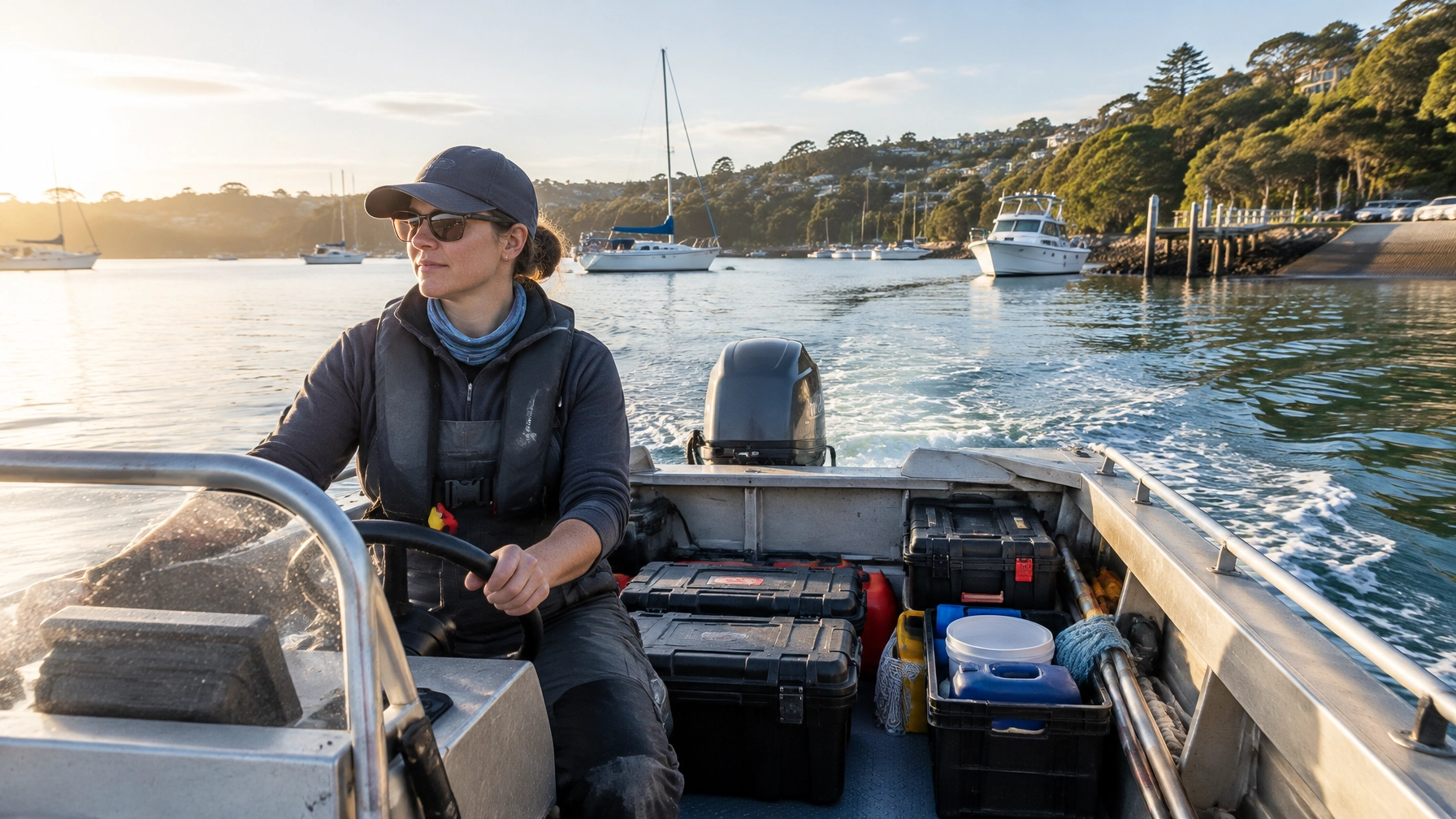
Plan the corridor before the day fills up
A Pittwater job in the morning and a Georges River call-out in the afternoon can turn a productive day into hours of road travel. The same applies on the water: moving between mooring bays without a planned sequence can mean extra tender runs, fuel and lost work time.
For mobile marine trades and skilled hands, the answer is to schedule around operating corridors. Set aside days for Pittwater, Sydney Harbour, the Georges River and Botany Bay, or Port Hacking, then group suitable work within each area. This isn’t about rushing jobs or combining work that shouldn’t be combined. It’s about making the travel between them more deliberate.

Build a day around access, not just distance
Two jobs close together on a map can have very different access needs. A marina berth might be reached from a car park; a swing mooring may require a workboat, a tender and a wharf transfer. A third job might need the contractor to tow a boat and trailer to a suitable launch point.
Before fixing the run, list the access method for each job. Then choose a sensible starting point and order of work. For example, a Pittwater run could start near the northern end of the planned work area and finish closer to the selected ramp or staging point, rather than doubling back across the bay.
| Corridor day | Possible staging or access points | Jobs that may cluster | Planning notes |
|---|---|---|---|
| Pittwater | Bayview, Church Point or another suitable local access point | Mooring checks, detailing, maintenance and parts delivery | Confirm mooring access, tide and weather; allow time for tender transfers |
| Sydney Harbour and Middle Harbour | Rozelle Bay, the Spit or another appropriate local access point | Marina work, inspections, electrical jobs and mooring support | Account for parking, marina access windows and any Spit Bridge transit |
| Georges River and Botany Bay | A suitable local ramp or marina for the jobs booked | Trailer-boat work, washdowns, maintenance and inspections | Check ramp suitability, parking, tides and the distance between work sites |
These are planning examples, not recommendations for a particular vessel or trip. Check current access conditions and choose launch points that suit the workboat, trailer and job locations. Transport for NSW’s boating maps are useful for corridor familiarisation, but they aren’t a substitute for current navigation information or official charts.
Tradie tip: Run the mooring bays in one circuit, not in and out. On Pittwater, work the top of the bay down towards your ramp or staging point, and you may avoid repeating the same transfer twice.
Match the route to the job
A useful schedule accounts for how the contractor and gear will reach each vessel, not just the distance between addresses.
- Road access: Often suits marina berths, boatyards and trailer-boat jobs. Check parking, loading access and any site-specific entry requirements.
- Workboat access: May be necessary for swing moorings or jobs where equipment and crew need to reach a vessel from the water.
- Wharf plus tender: Can work for smaller jobs, but needs a plan for carrying tools and parts safely between shore and vessel.
- Tow and launch: If a workboat travels on a trailer, include the ramp, towing route, launch and recovery in the day’s schedule.
A contractor moving between Middle Harbour and another corridor should decide whether the workboat, trailer or just the tools need to move. The best option depends on the vessel, conditions, access and time available. If a water movement requires passing the Spit Bridge, check the current NSW navigation and communication information and allow a buffer for the opening. Road travel through the Spit corridor has its own traffic delays, so don’t treat the bridge schedule and road journey as the same constraint.
Reduce repeat trips with better preparation
The most avoidable travel often comes from something small: a missing fitting, the wrong tool kit, or an access detail confirmed too late. A short check before departure can protect the work window and make a corridor day run more smoothly.

Before leaving for a corridor day, confirm:
- Each job’s location, vessel and access method.
- Parking, ramp suitability, marina entry and any access window.
- Weather and tide constraints for water-access work.
- Parts and consumables for the booked scope.
- The route order, fuel needs and return plan for tools or waste.
- A suitable job kit, such as electrical, detailing or mechanical tools.
Batch parts collection before heading into the corridor where practical. Keep common consumables stocked, and prepare job-specific kits so the van or workboat doesn’t need to be repacked at every stop. For remote moorings, also think through how parts, tools and waste will be transferred and returned.

Make travel terms clear in your quote
Travel has real costs: time, fuel, launch and recovery, transfers, parking, and sometimes a second trip for parts or equipment. Set out how these are handled before work begins, so the owner understands what the quote includes.
When several suitable jobs fall in the same area, a shared run can reduce the effective travel time per job. Contractors can reflect that efficiency in their own quotes where appropriate. Keep pricing decisions independent and specific to each job; the benefit comes from better scheduling, not from coordinating rates with other providers.
A clear quote can state:
- The work included and any assumptions about access.
- Whether travel or launch costs are included or itemised.
- What could change the price, such as a missed access window or an additional trip.
- How the owner and contractor will confirm any change in scope.
Use location details to make better decisions
MarineTasker is a two-sided technology platform and workflow facilitator; it doesn’t perform marine work or decide a provider’s qualifications. The platform is being built to help providers review job locations and access details before deciding whether to accept work.
For the planned January 2027 Greater Sydney and Broken Bay Open Beta, MarineTasker’s roadmap includes provider credential checks, site requirements surfaced before job acceptance, job photos and records, and a digital vessel logbook linked to the vessel’s HIN. These are planned workflow features, not a claim that every function is already live.
Early registration is open now. During the beta, the published founding offer includes $0 monthly subscriptions and a 10% commission on the first 20 jobs or six months, excluding GST and platform fees; standard commission is 15%+ (tiered). Check the current Open Beta details for the applicable terms.
If you’re a mobile marine tradie or skilled hand, claim your founding perks at marinetasker.io/beta ahead of the January 2027 launch. Many hands make light work.
Frequently asked questions
How can marine contractors reduce travel between jobs in Sydney?
Group jobs by waterway and access point, sequence them to limit backtracking, and confirm parts and site access before leaving.
Should mobile tradies plan by road or by water?
It depends on the work. Marina and yard jobs may be road-accessible; swing-mooring work may need a workboat, tender or wharf transfer. Some jobs require both.
What should a marine contractor confirm before accepting a distant job?
Check the precise location, access method, parking or launch arrangements, tide and weather constraints, parts availability, and any required marina access window.
Get first access to verified dockside care.
Join the Sydney Harbour & Broken Bay Open Beta. Lock in $25 toward your first Task or secure a 10% Founding Provider spot.
Lock In Founding Access