
The Pay-Per-Lead Trap: Why Static Directories Fail Marine Contractors
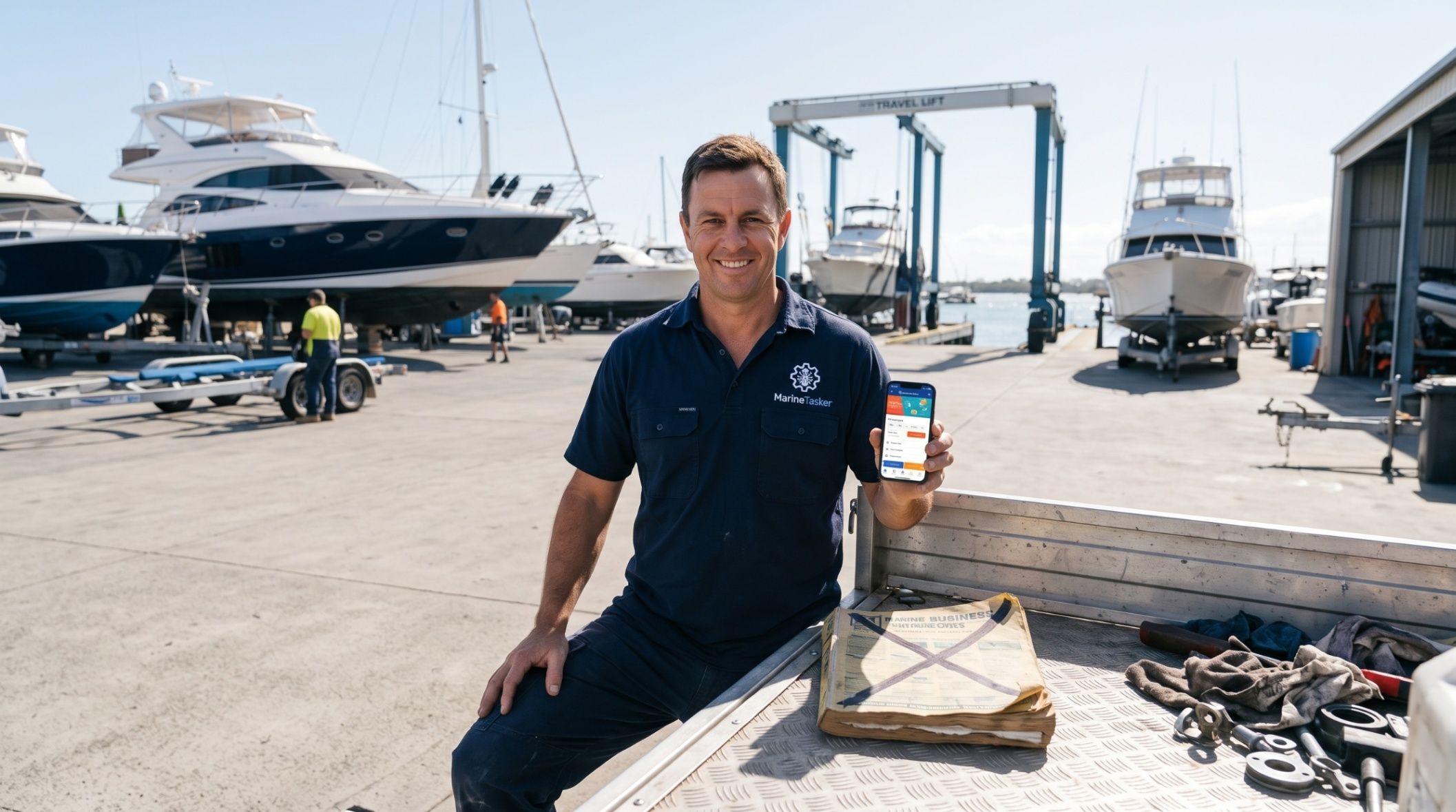
For years, the default advice for any trades business chasing work has been the same: get listed, wait for leads, pay for the good ones. That advice was written for plumbers and landscapers. Marine contractors inherited it, along with a set of assumptions that don’t survive contact with a boat, a waterway or a swing mooring.
This playbook takes a close look at the pay-per-lead model, why it strains against specialised marine work, and what a marine-dedicated alternative is being built to do differently. The platform isn’t live yet, and this article doesn’t pretend otherwise. It’s a problem-first look at the industry MarineTasker is preparing to enter, written while there’s still time for the people who’ll use it to shape it.
How the pay-per-lead model works, and where it bends
Generic home-services platforms such as HiPages and Bark sit between customers and businesses. A customer posts a request; businesses interested in the job pay for the lead, often before they know whether the job is real, in scope or already promised to someone else. On many platforms, a lead is shared with several businesses at once, so the customer gets quotes but each business pays for the chance to compete.
For high-volume general trades, that economics can work: leads are frequent, jobs are broadly comparable, and the occasional dud is absorbed by the flow. The criticisms of these platforms are well documented among contractors, and the model does suit some trades better than others.
Marine work breaks those assumptions. The jobs are fewer, they’re harder to compare, and they turn on details a generic lead rarely carries.
Why marine jobs don’t fit a generic lead
- Specialisation: a 100-hour diesel service, a gelcoat repair and a 12V electrical fault all fall under “boat work”, but they demand different skills and, for regulated work, different credentials. A directory category that lumps them together produces leads a contractor can’t assess from a sentence.
- Access changes the job: servicing a vessel at a Rozelle Bay slipway is a road-access job; the same service at a Pittwater swing mooring is a tender run with tide, load-out and safety planning. A lead that says “boat on a mooring, need a service” hides half the cost.
- Seasonality: marine demand swings hard between summer use and winter haul-out, so wasted quoting hours sting more when the calendar is thin.
- Vague briefs: “engine playing up, have a look” is a common lead. Pricing it blind means either over-quoting to be safe or winning a job that unravels on arrival.
| The issue with generic pay-per-lead directories | What a marine-dedicated alternative is being built to do |
|---|---|
| Leads shared with multiple competing businesses | One described job, with providers choosing whether to pitch |
| Fees per lead or credit, won or not | $0 monthly subscriptions during beta; no quoting or lead fees |
| Generic categories (“outdoor”, “other”) | Marine-only job scopes with vessel details, location and access |
| Payment arranged off-platform, invoice-and-chase | Upfront safe payments planned for launch, released after sign-off |
| Staged jobs tracked in texts and phone calls | Milestone payments planned for suitable staged work |
| Records scattered across channels | Job photos and records planned, feeding a HIN-linked vessel logbook |

Directory pricing and features vary, and this isn’t a claim that every platform works identically. It’s a comparison of the general pay-per-lead model with the workflow a marine-dedicated platform is being built to offer.
The unpaid invoice problem
The trap doesn’t end when the lead becomes a job. In the directory model, payment happens off-platform: the contractor finishes the work, invoices the customer and hopes. When payment doesn’t arrive, the platform has made its fee on the lead, and the chasing is entirely the contractor’s problem.
MarineTasker’s planned answer is upfront safe payments: funds secured before work begins, then released after the owner inspects and signs off dockside. For larger jobs, milestone payments are intended to release agreed amounts as stages complete. That protection is planned for the January 2027 launch and is not live during pre-launch, and this article won’t pretend it is.

The alternative being built
MarineTasker is a two-sided technology platform and workflow facilitator, not a marine contractor. Its pitch-and-choose workflow is designed so boat owners post one well-scoped job, with vessel details, location and access, and providers decide whether to quote. There are no quoting or lead fees.
Planned for the January 2027 launch: job photos and records, site requirements surfaced before a provider accepts a job, licence and insurance checks, and a digital vessel logbook linked to the boat’s HIN. Site inductions and check-in records are on the future roadmap. MarineTasker doesn’t employ tradies or decide what qualifications a job requires.
BIA Marine Card recognition is part of the marketplace.

Tradie tip: The best lead is the one that tells you what you’re walking into before you price it. If a platform charges you to find that out, the fee isn’t buying you work; it’s buying you the chance to guess.
Shape the alternative as a founding pro
MarineTasker’s Open Beta is planned to start in January 2027 in Greater Sydney and Broken Bay, with corridor rollouts to follow. The platform is in pre-launch, which is exactly why founding pros matter: early registrants can influence how job categories, scoping fields and workflows are shaped before the wider industry arrives.
During the pre-launch Open Beta period, marine pros and skilled hands who register can claim:
- $0 monthly subscriptions during beta.
- A flat 10% founding commission on the first 20 jobs or six months, whichever comes first, excluding GST and platform fees.
- A Founding badge.
- No lock-ins and no credit card required to register.
The founding offer is open to all pros and skilled hands who claim it during the pre-launch period; there are no caps or spot limits. Standard commission is 15%+ on tiered terms, excluding GST and platform fees.
The directories had their era, and many trades still make them work. Marine contractors deserve a model built around the water, not retrofitted to it. Many hands make light work.
Claim your founding perks at https://marinetasker.io/beta?tier=pro during the pre-launch Open Beta period.
Frequently asked questions
Do MarineTasker providers pay for leads?
No. MarineTasker has no quoting or lead fees. Commission applies to completed work under the platform’s terms.
Are upfront safe payments available now?
No. Payment protection is planned for the January 2027 launch. It is not live during pre-launch.
Is this saying directories are useless for every trade?
No. Generic directories suit many general home services. The issue examined here is their fit with specialised, access-dependent marine work, which is why a marine-dedicated alternative is being built.
Get first access to verified dockside care.
Join the Sydney Harbour & Broken Bay Open Beta. Lock in $25 toward your first Task or secure a 10% Founding Provider spot.
Lock In Founding Access